

Call for 2027 Award Nominations will open in November 2026.
Deadline: January 7, 2027
2026 Western Section Award Recipients
Distinguished Service Award
Brenda Murdoch, University of Idaho

Dr. Brenda Murdoch received her B.Sc. and Ph.D., with exemplary performance, from the University of Alberta. She was then employed as an assistant research professor in the School of Molecular Biosciences at Washington State University for several years prior to joining the University of Idaho in 2014. Dr. Murdoch is currently a professor in the Department of Animal, Veterinary and Food Sciences, affiliate faculty member in Bioinformatics and Computational Biology and a member of the Institute of Modeling Collaboration and Innovation at the University of Idaho. Dr. Murdoch’s research aims to characterize how genetic and epigenetic variations influence key biological traits, enhancing our understanding of the role genomic variation plays in both undesirable outcomes, such as disease, and desirable traits of economic importance. Key ongoing research projects that Dr. Murdoch is involved in include the functional annotation of the animal genomes of both cattle and sheep and assemblies of both the ovine and bovine pangenomes. Additionally, she has developed genomic resource tools to enhance the sheep and goat industry.
Young Scholar Award
Sponsored by: Zinpro
Julianna Messina, Colorado State University

Julianna Messina is a Master’s student in Animal Science at Colorado State University focused in stress physiology. Her primary research project examines how gestational management alters ovarian development and reproductive capacity in offspring, integrating fundamental physiology with applied solutions for production agriculture. She has also taken on a secondary large animal project aimed at characterizing sheep behavior and physiology in innovative grazing systems, including solar-integrated landscapes. Julianna has authored and co-authored multiple abstracts and presentations at regional and national meetings and is a co-author on a submitted manuscript with more in preparation. Beyond her research productivity, Julianna demonstrates exceptional leadership and teaching within the department. As a Graduate Teaching Assistant, she has independently developed and instructed introduction to animal science labs, and served as a teaching assistant for three upper-division physiology and reproduction lecture courses. She also coordinates and leads training for undergraduate research experiences, mentoring and managing approximately 20 students in applied research settings and additional students on the academic quadrathlon team. Through her integration of rigorous research, undergraduate mentorship, and departmental leadership, Julianna exemplifies the qualities of scholarship, initiative, and service recognized by this award.
Sponsored by: Zinpro
Emily Barr, University of Wyoming
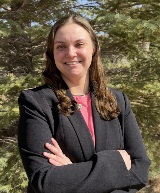
Emily Barr was raised as an active 4-H member breeding and raising market lamb and pigs in Pennsylvania. She completed her bachelor’s in animal science at the University of Findlay before coming to the University of Wyoming where she graduated with a M.S. in December of 2025. She is currently in her Ph.D. program at the University of Wyoming, continuing her work under the advisement of Dr. Hannah Cunningham-Hollinger. She has served as a lead or co-lead on 4 projects to-date ranging in application from precision livestock tools, biomedical swine models, growing phase health and feed efficiency in beef cattle, and finishing steer behavior, physiology, and carcass quality. She has presented her research at both the Western Section of ASAS and the Plant and Animal Genome conference where she was an invited speaker in the swine section. Furthermore, Emily is an exceptional student and teaching assistant, responsible for training and mentoring numerous undergraduates both in the classroom and in research. Emily is passionate about the livestock industry and has a keen interest in pursuing research that can utilize livestock models to improve livestock production and also studying impacts on human health. Emily has a desire to continue to work with colleagues in the School of Computing, Dr. Sean Field, to integrate precision livestock technologies in her research program and develop industry relevant tools. Her passion for research, education, and positively impacting the livestock industry is remarkable – she continues to grow as a scientist in all aspects of the scientific method and has a promising future in Animal Science.
Young Scientist Award
Melinda Ellison, University of Idaho

Dr. Melinda Ellison is an associate professor of Range Livestock at the University of Idaho Nancy M. Cummings Research, Extension and Education Center near Salmon, Idaho. She received her B.S., M.S., and Ph.D. in Animal and Veterinary Sciences from the University of Wyoming and began her career with the University of Idaho in 2016. Having grown up on a beef cattle ranch in Colorado, raising a personal flock of sheep, and maintaining close working connection with agriculture throughout her life, she conveys a great deal of dedication and passion to her research and outreach of applied solutions to grazing livestock issues with stakeholders and fellow scientists. Her research is centered on the critical role of range livestock systems for sustainable ecology and economies of rural communities in the US West. Specific areas of research and application include solutions to mitigate livestock-wildlife conflicts, rapidly quantify livestock and wildlife grazing impacts on rangelands at a landscape scale, offset nutritional challenges of targeted grazing regimens, accurately valuate/appraise livestock grazing for reduction of wildfire risk, and enhance targeted grazing accuracy through livestock genetics. Most notably, she has been a leader in the field of using virtual fencing to manage cattle on publicly owned, broad grazing allotments in the rugged mountains of Idaho to address challenges related to sensitive fish and wildlife habitats and post-wildfire grazing management.
2026 Graduate Student Paper Competition
3rd Place
Samantha Ekstrom, North Dakota State University
#PS-8: Pre-breeding body condition score influences reproductive efficiency and ewe productivity but is not associated with late-gestation metabolic status or lamb health in fall-lambing Rambouillet ewes.
2nd Place
Niklas Kronlein, New Mexico State University
#PS-6: Elucidating the role of the CXCL12/CXCR4 chemokine axis in regulating vascular endothelial growth factor (VEGF) localization during sheep pregnancy.
1st Place
Sara Gurule, New Mexico State University
#PS-9: Repeated low-dose endotoxin exposure elicits maternal endocrine and hematologic alterations in nulliparous ewes.
2026 Undergraduate Student Poster Competition
3rd Place
Ema T. Alvarez, New Mexico State University
#PS-11: Effects of modulating CXCL 12 signaling on inflammatory cytokines during gestation in sheep.
2nd Place
Hailey Wood, Colorado State University
#PS-13: Understanding lamb behavior during band castration with differing routes of lidocaine administration.
1st Place
Madelynn K. Dunivan, New Mexico State University
#PS-12: Effects of L-carnitine on heifer serum energy metabolites and body condition score.
2026 Institutional Award
New Mexico State University
2026 3MT Video Competition
3rd Place
Julianna Messina, Colorado State University
2nd Place
Naomi Lucero, New Mexico State University
1st Place
Madeline Mancke, Kansas State University
2026 Applied Animal Science Award
3rd Place
Paul Beck, Oklahoma State University
#23: Backgrounding strategy impacts finishing performance and carcass characteristics.
2nd Place
Samantha Ekstrom, North Dakota State University
#8: Pre-breeding body condition score influences reproductive efficiency and ewe productivity but is not associated with late-gestation metabolic status or lamb health in fall-lambing Rambouillet ewes.
1st Place
Benjamin Duran, California State University, Chico
#PS-16: Early pregnancy detection during the peri-implantation period in sheep using pregnancy associated glycoprotein.


